Your piano is out of tune. Maybe it hasn’t been touched in a few years. Maybe you just moved and something sounds off. Maybe you inherited an instrument and have no idea when it was last serviced.
Whatever the reason, you need someone qualified to look at it. And if you’ve never hired a piano technician before, it’s not always obvious how to find a good one or what separates a competent technician from one who’s just available.
This isn’t a complicated process, but there are a few things worth knowing before you book anyone.
Start With Certification
The Registered Piano Technician (RPT) credential from the Piano Technicians Guild is the industry standard. Earning it requires passing both written and technical exams covering tuning, regulation, and repair. It’s not just a membership card. It means the person has been tested on their skills by an independent organization.
Not every competent technician has an RPT, and the absence of one doesn’t automatically disqualify someone with years of experience. But when you’re starting a search without a personal referral to go on, it’s the easiest way to filter out inexperienced practitioners. The PTG has a member locator on their website where you can search by zip code and find credentialed technicians in your area.
Ask About Experience With Your Piano Type
Grand pianos and upright pianos are different instruments mechanically. Steinways, Yamahas, and Kawais each have their quirks. A technician who primarily works on studio uprights may not be the best choice for a concert grand, and vice versa.
When you call, mention what you have. A straightforward question like “do you work on [brand/type] regularly?” tells you a lot. If they hesitate or give a vague answer, keep looking.
It’s also worth asking whether they do repairs in addition to tuning. Many technicians offer both, but some specialize in one or the other. If your piano has a sticky key, a broken string, or worn hammer felts, you want someone who can assess the full picture in one visit rather than sending you to a second person for the repair side.
Bay Area Factors Worth Knowing
The Bay Area’s climate creates some specific challenges for piano owners. Coastal humidity near San Francisco and the peninsula fluctuates more than most people realize, and that moisture variation directly affects tuning stability. Pianos in homes near the water or in older buildings without climate control often need tuning more frequently than the standard twice-a-year recommendation.
Fog season matters too. A piano tuned in July when conditions are dry may need a follow-up by October when the marine layer settles in. Pianos in the East Bay tend to fare better since the climate is more stable, but they’re not immune either. Temperature swings between day and night in places like Walnut Creek or Livermore can stress the instrument in a different way.
A local technician who works regularly in the Bay Area will factor this into their recommendations. One who primarily services inland areas or who travels in from outside the region may not think to mention it.
What to Expect During the Appointment
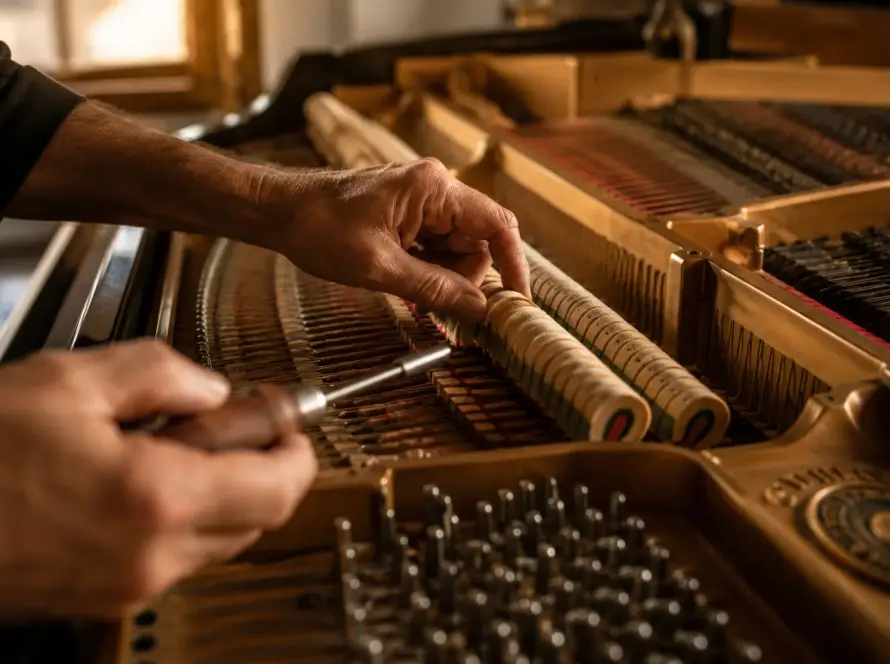
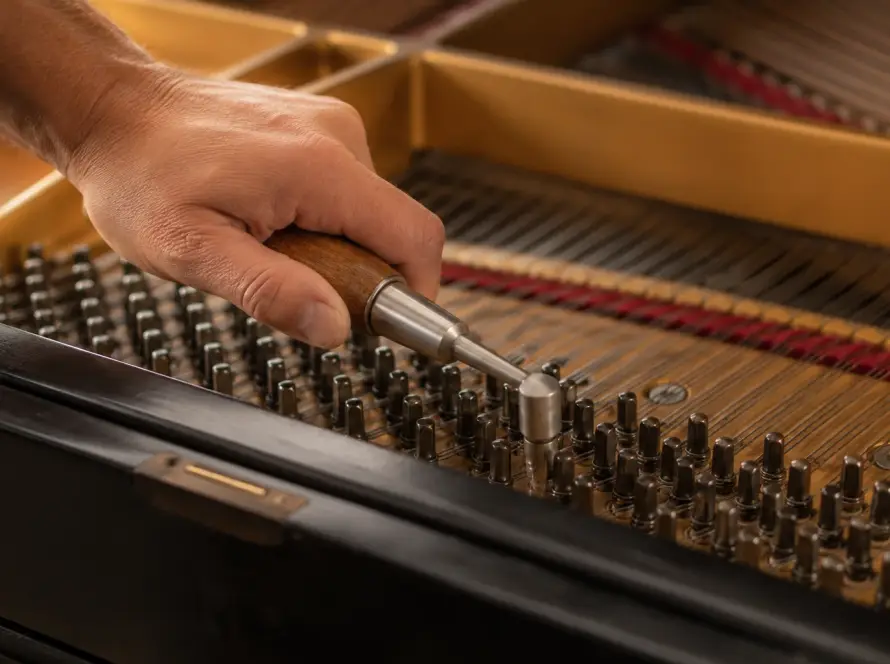
A standard piano tuning takes 45 minutes to an hour. The technician will use a tuning hammer to adjust each of the roughly 220 strings inside the piano to the correct pitch. They’ll work systematically across the keyboard and check their work as they go.
If the piano is significantly out of tune, they’ll do a pitch raise first, which is a rough adjustment to bring the overall tension up before fine-tuning. This takes additional time and may cost more. It’s not something to be annoyed about. It’s necessary because a piano tuned too far below standard pitch can’t hold a proper tuning without it. We cover this in more detail in our guide on how long piano tuning takes and how often you need it.
A good technician will also do a basic visual inspection while they’re in there. They won’t always charge extra for this, but they should flag anything worth addressing, whether that’s a loose tuning pin, worn felts, or a regulation issue that’s affecting the action.
What to Ask Before Booking
You don’t need to interrogate anyone, but a few direct questions before scheduling will tell you whether a technician is a good fit:
- How long have you been tuning professionally?
- Are you PTG certified?
- Do you service this area regularly?
- What happens if the piano needs more than a standard tuning?
That last one matters. Pianos that haven’t been tuned in several years often need a pitch raise before a proper tuning can hold. This is normal and not a red flag, but a good technician will explain it upfront rather than surprise you with extra charges on the day.
Red Flags to Watch For
Unusually low pricing. Tuning a piano properly takes 45 minutes to an hour minimum. Someone charging significantly less than the going rate in your area is either rushing through the job or lacks the experience to know what they’re doing. In the Bay Area, where service rates reflect the cost of living, a suspiciously cheap quote is worth questioning.
No references or reviews. Experienced technicians have a track record. If you can’t find any online presence, reviews, or a way to verify their work history, ask for references directly. A good technician who’s been in business for years will have no trouble providing them.
Vague answers about credentials. A qualified technician won’t be defensive when you ask about certification or experience. If someone gets evasive or tries to redirect the question, trust your instincts and keep looking.
How Often Should You Schedule Service?
Most pianos in the Bay Area do well with two tunings per year. One in the spring after the rainy season, one in the fall before indoor heating kicks in and dries everything out. This is the standard recommendation, and it holds for most instruments in most homes.
That said, a few situations call for more frequent service. Pianos in professional or educational settings, instruments played daily by serious students, and any piano that’s been recently moved or restored should be checked more often. Newly moved pianos especially need time to stabilize in their new environment before a tuning will hold properly.
If your piano hasn’t been tuned in more than two years, expect the first appointment to take longer and potentially cost more. That’s not a scam. It’s just the reality of getting an instrument back into shape, and any honest technician will tell you that upfront.
Sweet Sound Piano
Sweet Sound Piano has been serving the Bay Area for over 30 years. Our technicians are PTG-certified and work regularly across San Francisco, the East Bay, the Peninsula, and the South Bay. Whether your piano needs a standard tuning, a pitch raise, or a full assessment, we’ll give you a straight answer about what it actually needs.